Why Billing & Coding Skills Matter for Your Wellness Career
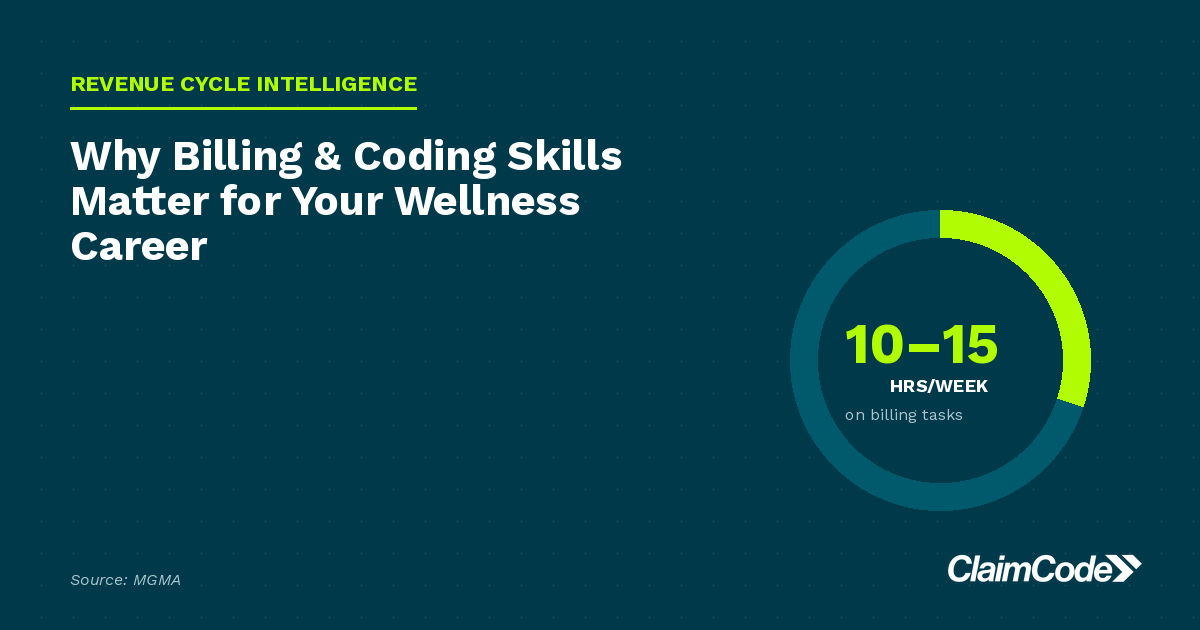
Administrative tasks, particularly billing and coding, routinely consume 10–15 hours per week. Learn why mastering these skills early is essential for your wellness career.
Beyond Hands-On Care: The Hidden Hours of Wellness Practice
If you're training to be a chiropractor, physical therapist (PT), massage therapist, or acupuncturist, direct patient care is probably what drew you in. Hands-on therapeutic work and patient interactions are why you entered the field. But clinical hours make up only part of the week. Administrative tasks — particularly billing and coding — routinely consume 10–15 hours a week of a practitioner's time.
Most wellness grads underestimate how much of the job that is. Learning to code claims well is a direct investment in your future productivity and financial stability.
Real-World Consequences: Denials, Delays, and Lost Income
Consider this scenario: a newly graduated PT opens a small practice, billing around 50 claims a month. Because their coding training was thin, about 20% of those claims are miscoded. That oversight costs them $2,000–$3,000 of delayed or lost income every month — real money at the exact moment a new practice can least afford it.
A single missed modifier or incorrect ICD-10 diagnosis code can lead to claim denials or delays in reimbursement by 30–45 days. Imagine the ripple effect: delayed income means less predictable cash flow, making it difficult to pay bills, invest in equipment, or even maintain steady staffing.
The Importance of Early Proficiency
Most wellness curricula still cover Current Procedural Terminology (CPT) and International Classification of Diseases (ICD-10) codes only at the surface. Students get a basic introduction but rarely enough depth to handle real billing scenarios with confidence.
Learning coding well during your studies sets you apart. Intern supervisors and employers notice when a new grad can read a denial without flinching.
Confidence Comes From Reps, Not Rules
Being comfortable with billing changes how you show up in the clinical role. Once the "insurance speak" stops feeling foreign, payer conversations get clearer — and a lot shorter.
Practical Steps for Students
The fastest way to close the gap is to pick up coding reps outside of class. Enroll in a supplemental coding workshop through your school or a professional association. Sit in on the forums where practice owners and billing managers swap stories about denial reasons — the recurring complaints are your curriculum. And if there are wellness clinics near you, ask for a 20-minute informational conversation about how their billing runs; most will say yes.
Key Takeaway: Your Career, Your Responsibility
Learning billing and coding early is one of the higher-leverage moves a wellness student can make. The skills pay you back every month as a clinician, and they keep paying back if you eventually own a practice.
Quick Exercise: Identify three local wellness clinics and schedule brief informational conversations with them about how they handle billing and coding.
The billing-fluent version of you will spend more time with patients and less time on denials.
Related Reading
Denied Outpatient Claims Rose 14% in 2025. Here's What That Costs the Average PT or Chiro Practice.
Denied outpatient claim amounts rose 14% in 2025. Here's what the math means for PT and chiro practices — and how to stop the revenue from walking out the door.
What the UHC Prior Auth Expansion Means for Your PT and Chiropractic Billing Team
UHC's Medicare Advantage prior authorization program keeps expanding. Here's what the 6-visit waiver actually covers — and where the documentation traps are.

Dr. Andrew O'DonnellPhD, LSSGB
CEO and founder of ClaimCode. Expert in insurance analytics, digital transformation, and business operations. Passionate about helping private wellness practices manage their revenue cycle with meaningful insights.
Ready to stop losing revenue to denied claims?
ClaimCode gives your billing team real-time claim visibility and AI-powered remediation guidance — at flat-fee pricing.
Get Early Access